


Trapped. Now every minute counts.
From impact to the trauma center, the “Golden Period of Trauma” is ticking away, and a decisive part of it belongs to your fire department: technical rescue. With VR TH VU Training, your responders practice exactly these procedures before the real call comes.
Based on vfdb guideline 06/01 “Technisch-medizinische Rettung nach Verkehrsunfällen” (technical and medical rescue at road traffic collisions)- Complete system €2.999,00
- Incl. Meta Quest 3S & transport case
- Training & exam mode
- On account for authorities
Every move must be second nature
-
138
people are seriously injured in road traffic collisions in Germany every day.
-
14 + 2
fire department and EMS responders: that is what the vfdb guideline plans for a single trapped person. Every role must be second nature.
-
1
stopwatch always running: the vfdb guideline assigns a dedicated responder solely to monitor the rescue time throughout.
As fast as possible, as gently as necessary.
This principle of patient-centered rescue needs one thing above all: routine. Yet for the individual responder, a serious road traffic collision is a rare call, and practice vehicles take a lot of effort to organize.
That is why the vfdb guideline calls for initial and continuing training that is as realistic as possible. VR TH VU Training brings the incident into your training room for exactly that: realistic, repeatable, anytime.

Measurable effects of VR training
more confidence in applying what they have learned: VR learners act in the decisive moment instead of hesitating.
Source: PwC study “The Effectiveness of VR Soft Skills Training” (2020)Training speed
up to 4×Emotional connection to content
3.75×Speed vs. e-learning
up to 1.5×- Developed by firefighters: The scenarios are created with fire department experts and career firefighters.
- Real-time feedback: Every decision is captured and corrected on the spot, so mistakes happen in training, not at the scene.
- Unlimited repetitions: Practice until it becomes routine, without organizing a single practice vehicle.
We'll advise you personally.
Whether you run a volunteer or plant fire department or a training center: in a consultation, we work out together how VR TH VU Training fits your training program.
With instruction on request
- Instruction on the VR system: your responders start training with confidence.
- First aid training included.
- Medical training included.
What your team practices on the car
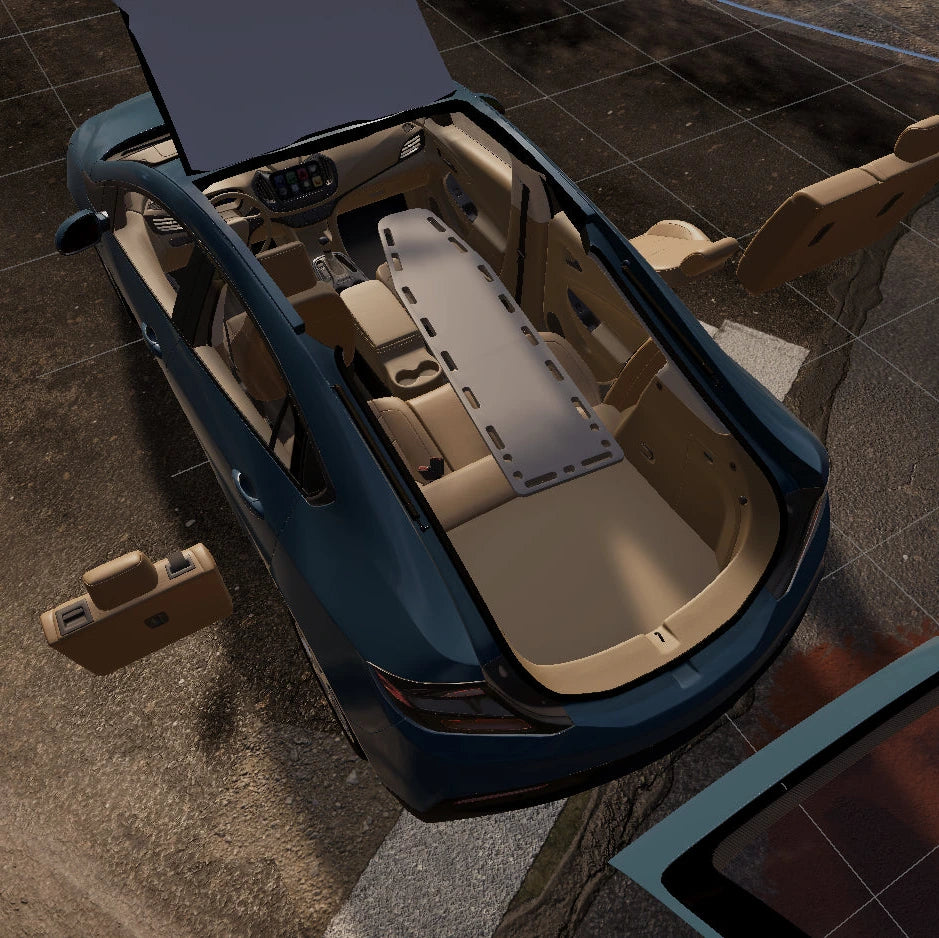
From securing the vehicle to extrication: this is how your team practices technical rescue, with real-time feedback and as many repetitions as you like.

Securing & stabilizing
A stable, secured crash vehicle: the basis of every rescue
- Securing against rolling and sliding
- Stabilizing by cribbing and strutting
- Repeatable as often as you like

Gaining access
Spreading, cutting and separating, exactly where it is tactically right
- Purchase points on A to C pillars, hinges and striker plates
- Working with hydraulic rescue tools
- Real-time feedback on every step

Tunneling & extrication
Advanced evacuation technique for gentle patient extrication
- Tunneling technique step by step
- Creating rescue openings with care for the patient
- The technically correct sequence of steps

Vehicle hazards
Handling modern vehicles safely
- Battery and high-voltage management
- Recognizing airbag and seatbelt pretensioner zones
- Glass management and emergency shutdown
- Also included
- Training & exam mode
- Structured learning paths for beginners & pros
- Scalable for individual and team training

Everything in one case
- Meta Quest 3S included: The VR headset comes in the box.
- Perpetual license: Buy once, use permanently. Updates included in the first year.
- Training & exam mode: Learn, test, certify. The training level becomes visible.
- Scalable: From individual training to team exercises in your drills.
- Sturdy transport case: everything stowed safely, ready for any training room.
Learn first, then prove it: exam mode shows whether the procedures are second nature, so you make your responders' training level visible during drills.
Training drills compared
Technical rescue: classic vs. VR
Live drill on a real vehicle
- Nachteil: Practice vehicles have to be organized, transported and disposed of
- Nachteil: Every cut can only be made once, then the vehicle is used up
- Nachteil: Date, equipment and space all have to line up for the whole group
- Nachteil: Rare incidents are hard to recreate for real
With VR TH VU Training
- Vorteil: Unlimited repetitions: practice every move until it is second nature
- Vorteil: Available 24/7: training whenever it fits your schedule
- Vorteil: No material wear, no disposal: sustainable and easy to plan
- Vorteil: Realistic incidents with real-time feedback
- Vorteil: Training and exam mode makes progress measurable
- Vorteil: Structured learning paths for beginners and pros
How a training session works
From putting on the headset to the evaluation: four steps to greater confidence in technical rescue operations.
-
Pick a scenario
Structured learning paths guide beginners through the basics step by step, while experienced responders choose demanding incidents.
-
Dive in & act
In VR, you work on the crashed vehicle: secure, stabilize, gain access, extricate. Realistic and risk-free.
-
Get feedback
Every action is analyzed immediately. Mistakes are allowed and are corrected straight away, so the right procedures stick.
-
Test & certify
Finally, it's on to exam mode: here every responder shows that the procedures are second nature, and you see training level and progress at a glance.
Tip for your drillsMake VR sessions a regular fixture between your live drills: short, frequent runs keep the moves fresh, and you save the practice vehicle for the final exercise.

Training duo
Add first aid to your training
VR TH VU Training has a matching sister system: the VR CPR training brings resuscitation, AED operation and first aid into the same VR training, including a training manikin. Together, you cover technical rescue and first aid in your drills.
For procurement
Specs & what's in the box
All details for your procurement or training proposal at a glance.
| Product type | VR training system for technical rescue at road traffic collisions |
|---|---|
| In the box | Software license incl. installation · Meta Quest 3S VR headset · Sturdy transport case |
| License model | Perpetual license: buy once, use permanently |
| Updates | Included in the first year · then optional feature updates (20% of the purchase price) |
| Modes | Training and exam mode: learn, test, certify |
| Training content | Securing & stabilizing · Gaining access (spreading, cutting, separating) · Tunneling technique · Battery/high-voltage management · Airbag/seatbelt pretensioner zones · Glass management |
| Scalability | Individual training and team exercises |
| Availability | 24/7, independent of in-person sessions |
| Areas of use | Fire departments & technical rescue units · THW & plant fire departments · Training centers & fire academies |
| Headset model | Meta Quest 3S, included in the box |
A quote for your fire department
Tell us what you train for, and we will put together the right quote and get back to you personally. Only your email address is required. Everything else helps us get specific right away.
- Reply within 24 hours: personal, not automated.
- Purchase on account for municipalities, volunteer fire departments and emergency services units.
- A quote with all line items and delivery times, ready for your procurement.
- Demo available: experience the system yourself before you buy.