


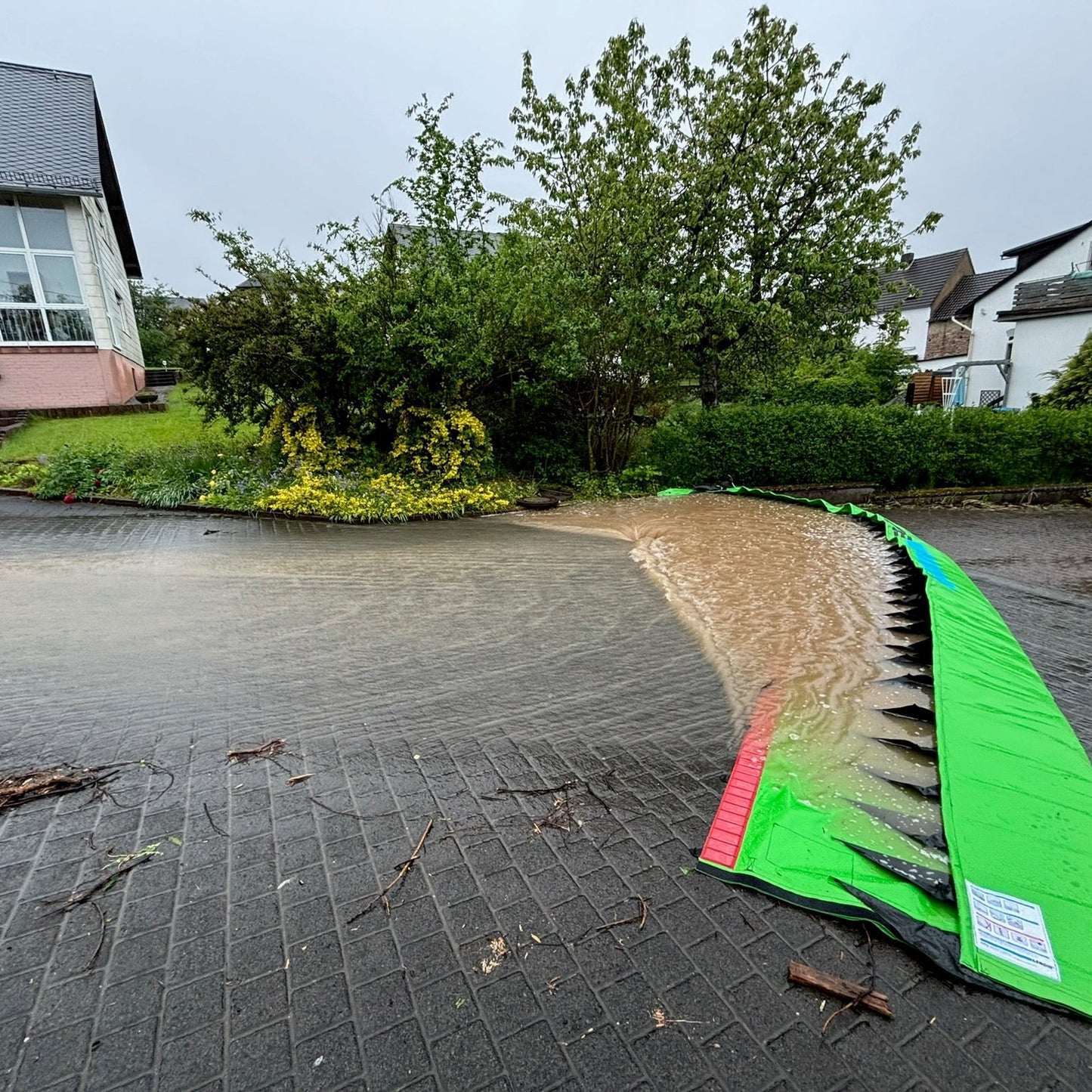
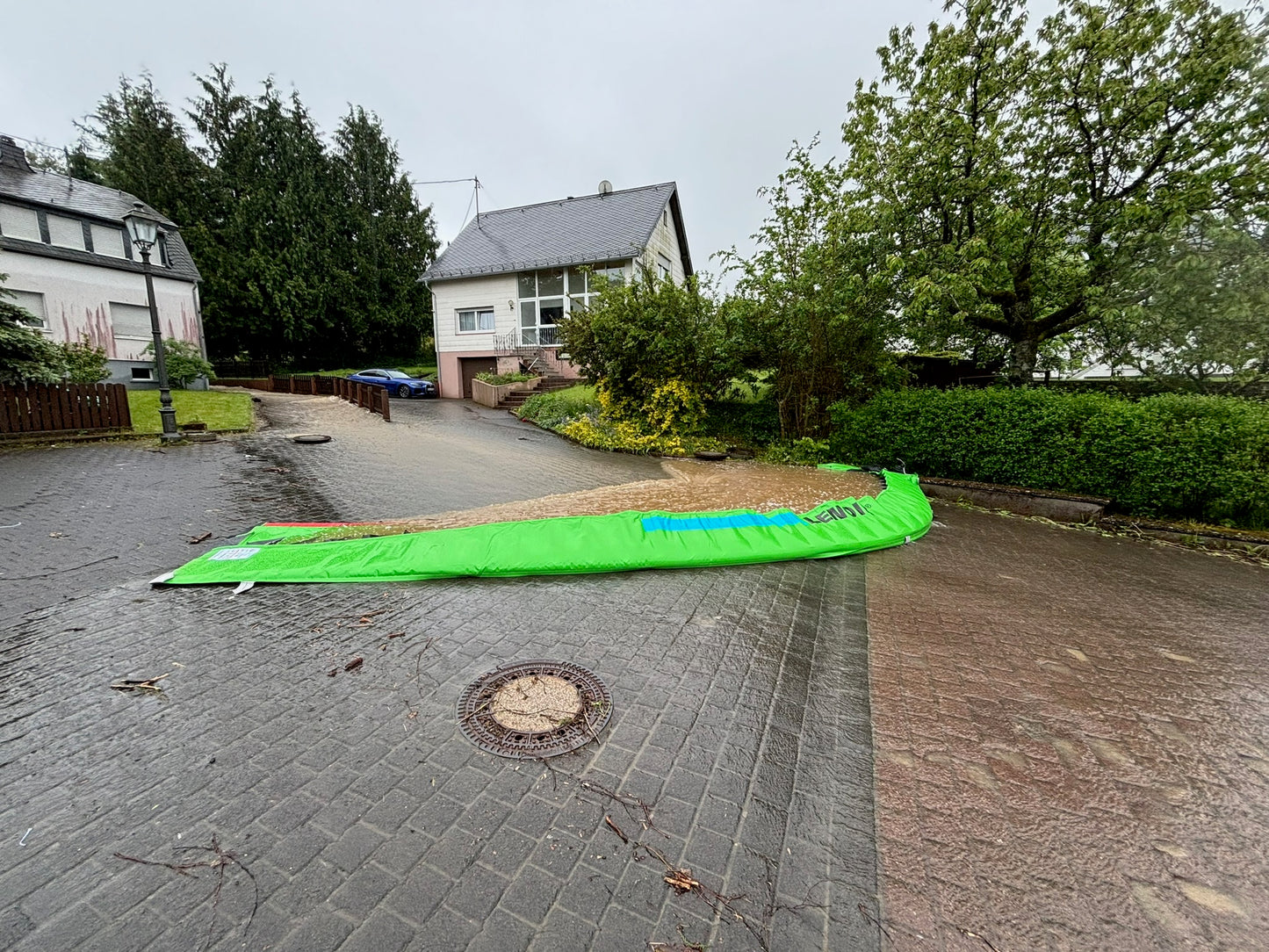

Roll out
Two responders carry the rolled-up element to the incident scene and roll it out.
Dein Warenkorb
0 Artikel
 Jan Heinemann berät Dich
+49 1522 8790057
Jan Heinemann berät Dich
+49 1522 8790057 vfdb Excellence Award 2025
für SnakE®
vfdb Excellence Award 2025
für SnakE®

 I’ll advise you personally.
Jan Heinemann, Founder
I’ll advise you personally.
Jan Heinemann, Founder
 I’ll advise you personally.
+49 1522 8790057
I’ll advise you personally.
Jan Heinemann, Founder
I’ll advise you personally.
+49 1522 8790057
I’ll advise you personally.
Jan Heinemann, Founder
 I’ll advise you personally.
Jan Heinemann, Founder
I’ll advise you personally.
Jan Heinemann, Founder
Protection & decon
Roll out, position: the oncoming water raises the Lenoir® Water Barrier by itself and presses it onto the ground. The higher the flood, the more stable it stands.
Over 1,400 units in use across Europe · EVH-certified · Developed and made in SwitzerlandThe heart of the system: no pump, no generator, no setup team. Physics does the work.
The water flows onto the lower leg of the flap barrier and fills it: the retaining wall rises by itself.
The weight of the dammed water presses the barrier onto the ground. More water means more contact pressure and a firmer hold.
It seals and keeps the barrier in shape, even on paving, grass and varying ground.
The upper leg defines the usable damming height: from 15 cm (LWS 15) to 1 m (LWS 100).
Jump straight to your protection goal for the right version. We plan length and options with you.
No sand, no power, no heavy equipment: the barrier uses the force of the very water it is meant to hold back.
Two responders carry the rolled-up element to the incident scene and roll it out.

Lay it out straight or in an arc, connect as needed: protective lines in any length required.

The oncoming water fills the barrier, raises it and presses it onto the ground. The more water, the more stable.
The recommendations are based on the usable damming height. Not sure? We size your system after a site survey.
Stop shallow incoming water at ramps and entrances, on asphalt and paving.
LWS 15 / 35: damming height up to 15/35 cmSecure doors, thresholds and facades: the barrier adapts to the ground.
LWS 35: damming height up to 35 cmShield streets, divert water where you want it: connectable to any length.
LWS 35 / 50: damming height up to 50 cmSecure riverbanks or dam up a stream into a firefighting water reservoir.
LWS 70 / 100: damming height up to 1 mContain contaminated firewater before it reaches a watercourse. For hazmat: antistatic version.
LWS 50: with optional drain openingContain escaping water in seconds and slow it down.
No studio shots: real incidents and wet drills with fire departments in Germany and Switzerland.


Flap barriers with two legs: the upper leg defines the damming height. All figures are approximate values according to the manufacturer (Lenoir AG).
For shallow incoming water at door thresholds and driveways.
For streets and property protection in heavy rain.
For higher water levels and firewater retention.
For critical facilities and riverbanks.
The maximum protective wall: up to 1 m damming height.
All types can be connected, each to the next smaller and next larger type. A sandbag roll for extra weight is also recommended. Price based on sizing.
Flap barriers with two legs: the upper leg defines the damming height.
| Typ | LWS 15 | LWS 35 | LWS 50 | LWS 70 | LWS 100 |
|---|---|---|---|---|---|
| Maße | |||||
| Nutzbare Stauhöhe | bis 15 cm | bis 35 cm | bis 50 cm | bis 70 cm | bis 100 cm |
| Elementlängen | 5 · 10 · 15 · 20 m | 5 · 10 · 15 · 20 m | 5 · 10 · 15 · 20 m | 5 · 10 · 15 m | 5 · 10 · 15 m |
| Durchmesser, 10-m-Element gerollt | 30 cm | 35 cm | 40 cm | 50 cm | 65 cm |
| Koppelbar mit anderen Sperren | Ja — jeweils mit dem nächst kleineren und/oder nächst größeren Typ | ||||
| Gewichte | |||||
| Leergewicht, 10-m-Element | ca. 15 kg | ca. 20 kg | ca. 15 kg | ca. 45 kg | ca. 60 kg |
| Ersetzt Sand (10-m-Element) | 1.500 kg | 7.000 kg | 12.000 kg | 15.000 kg | 35.000 kg |
| Zusatzausstattung | |||||
| Integrierte Gewichte | ✓ Standard | ✓ auf Wunsch | ✓ auf Wunsch | – | – |
| Antirutschstreifen | ✓ Standard | ✓ auf Wunsch | – | – | – |
| Öffnung für kontrolliertes Abfließen | – | – | ✓ auf Wunsch | – | – |
| Rollsandsack zum Beschweren | Zusätzlich zu empfehlen | ||||
| Material | |||||
| Stoff | Polyester-Gewebe, beidseitig PVC-beschichtet; temperaturbeständig von −30 °C bis +70 °C | ||||
| Stoffgewicht | ca. 900 g/m² | ||||
| Reißfestigkeit (auf 5 cm) | > 550 kg | ||||
Once for filling and hauling, and again after the operation, when soaked bags have to be disposed of as hazardous waste.
Reusable instead of hazardous waste: minimal life-cycle costs.
Rolled out in seconds: the water raises the barrier by itself.
From paving to grass: effective where rigid systems fail.
Choose the damming height and length of your protective line: the calculator shows how many sandbags you would need and how few Lenoir® elements achieve the same protection.
Bitte eine Staulänge von mindestens 1 m eingeben (halbe Meter erlaubt, z. B. 12,5).
Sandsackbedarf nach THW-Berechnungsmethode (Pyramidenaufbau, Richtwerte). Tatsächlicher Bedarf kann je nach Untergrund und Einbausituation abweichen. Lenoir-Produktdaten: Herstellerangaben (ca.-Werte).

Rolled flat, protected and stored dry, with no bulky components and no loose small parts. That saves storage space, simplifies inventory and speeds up logistics.
Site survey, hazard and ground analysis right at the property, from line protection to building protection. Optionally with briefing, wet drills and a logistics concept, so your crews act safely in a real emergency.

Procurement
We work with fire departments, THW (Germany's Federal Agency for Technical Relief), municipalities and companies, and know every step from needs assessment via the quote with line items and lead time to the on-site briefing.
For municipalities, volunteer fire departments and emergency services units. XRechnung and compliant PDF invoices available.
Depends on type and quantity: binding dates are stated in your quote.
Instruction, site survey and wet drills for your crews, on request right at your site.
Price based on sizing: depends on type, length and options.


Tell us what you want to protect: we plan type, length and options with you. You get a quote with line items and lead time.


